Use Cases

Why Marketers Struggle to Track Offline Conversions — And How CallAtlas Fixes It

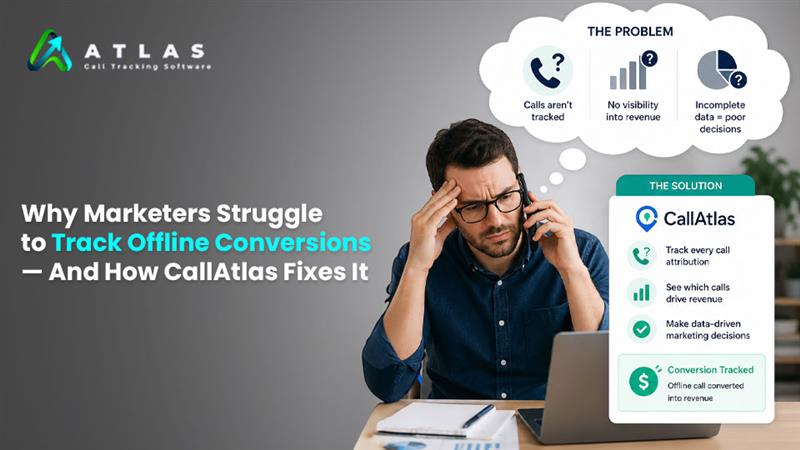
Why Marketers Struggle to Track Offline Conversions – And How CallAtlas Fixes It

In today’s digital-first world, marketers are obsessed with tracking everything—clicks, impressions, conversions, and ROI. But there’s one major gap that still exists: offline conversions, especially phone calls. Many businesses—real estate, healthcare, automotive, home services—still rely heavily on phone calls to close deals. Yet, most marketers struggle to connect these calls back to their campaigns. The result? Incomplete data, poor decision-making, and wasted ad spend. Let’s break down why this problem exists and how CallAtlas helps solve it. The Real Problem: Offline Conversions Are Invisible 1. No Clear Attribution When someone fills out a form, tracking is easy. But when a user sees an ad and calls your business directly, there’s often no clear way to know which campaign drove that call. Did it come from Google Ads? Facebook? Organic search?Most marketers are left guessing. 2. Missed High-Intent Leads Phone calls are usually high-intent leads—people ready to buy or inquire seriously. But without proper systems: And the worst part? These missed opportunities are rarely tracked or reported. 3. No Insight Into Call Quality Even when calls are received, marketers don’t know: Without this insight, optimizing campaigns becomes a guessing game. 4. Fragmented Data Across Channels Marketers use multiple platforms—Google Ads, Meta Ads, landing pages—but call data sits outside these systems. This creates a disconnect between: So, ROI calculations are often incomplete or misleading. How CallAtlas Fixes These Problems CallAtlas bridges the gap between online marketing and offline conversions by giving you complete visibility into your calls. 1. Accurate Call Attribution with Unique Numbers CallAtlas assigns unique tracking numbers to different campaigns, channels, or ads. So when a customer calls: 👉 No more guessing—just clear, actionable data. 2. Smart Call Routing (Never Miss a Lead) Missed calls = lost revenue. CallAtlas offers intelligent call routing, which ensures: 👉 This helps businesses capture every opportunity and reduce lead loss. 3. Call Recording for Better Insights Understanding your customers is key to improving conversions. With call recording, you can: 👉 Turn every call into a learning opportunity. 4. Real-Time Call Analytics CallAtlas provides real-time analytics dashboards that show: 👉 This allows marketers to optimize campaigns based on real performance, not assumptions. 5. Measure True ROI By connecting calls directly to campaigns, CallAtlas helps you: 👉 Finally, you get a complete picture of your marketing ROI. Why This Matters in 2026 Marketing is becoming more data-driven than ever. But if you’re not tracking offline conversions like calls, you’re only seeing half the picture. Businesses that adopt call tracking solutions like CallAtlas: Conclusion Tracking offline conversions has always been a blind spot for marketers—but it doesn’t have to be. With CallAtlas, you can: In short, it turns your missing data into measurable growth.

Why Marketers Struggle to Track Offline Conversions – And How CallAtlas Fixes It Read More »
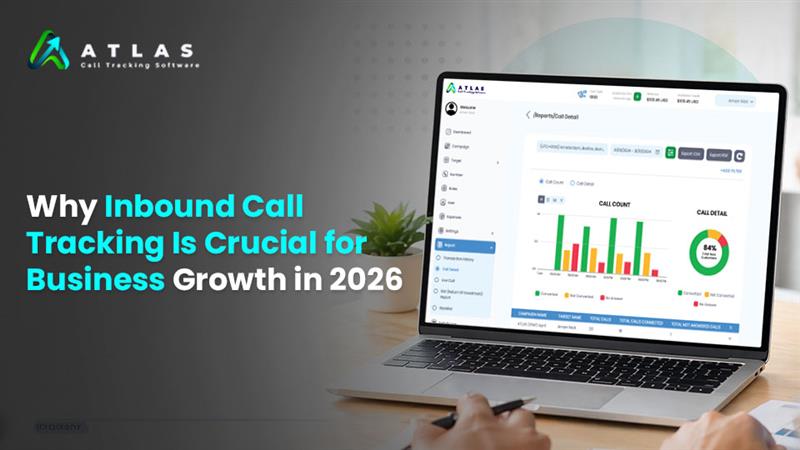
Why Inbound Call Tracking Is Crucial for Business Growth in 2026

In 2026, businesses are more data-driven than ever—but one major gap still exists in many marketing strategies: phone calls. While companies track clicks, impressions, and online conversions in detail, inbound calls often remain under-measured. Yet, for many industries, phone calls represent the highest-intent leads and the most valuable conversions. This is where inbound call tracking becomes not just useful, but essential for business growth. The Shift Toward High-Intent Customer Interactions Customers today don’t call businesses casually. A phone call usually indicates strong intent—whether it’s to make a purchase, book a service, or get detailed information before deciding. Unlike casual website visits, inbound calls often come from users who are already deep in the decision-making process. Without proper tracking, businesses miss critical insights into what drives these high-value interactions. Inbound call tracking bridges this gap by connecting each call to its original marketing source. Whether a customer found your business through a Google ad, organic search, social media, or an offline campaign, you can track exactly what triggered that call. Complete Marketing Attribution Across Channels One of the biggest challenges marketers face is understanding which campaigns truly deliver results. Traditional analytics tools focus heavily on online actions but fail to connect offline conversions like phone calls. Inbound call tracking enables full-funnel attribution by: This allows businesses to stop guessing and start investing in strategies that actually work, improving overall marketing efficiency. Boosting Conversion Rates with Actionable Insights Inbound call tracking does more than just count calls—it provides meaningful insights that can directly improve conversions. By analyzing call data such as duration, time, location, and outcomes, businesses can identify patterns and optimize their approach. For example: With these insights, businesses can refine both marketing and sales strategies to maximize conversions. Enhancing Customer Experience Customer experience plays a critical role in business growth, and inbound calls are a key touchpoint. Missed calls, long wait times, or poor call handling can result in lost revenue and damaged brand perception. Inbound call tracking helps improve customer experience by: This ensures that every customer interaction is handled efficiently and professionally, leading to higher satisfaction and better retention. Data-Driven Decision Making in 2026 In today’s competitive landscape, decisions based on assumptions are no longer enough. Businesses need real-time, accurate data to stay ahead. Inbound call tracking transforms phone calls into measurable data points that can be analyzed just like digital interactions. This empowers teams to: As automation and AI continue to evolve, integrating call data into your analytics ecosystem will become even more critical. Gaining a Competitive Advantage Many businesses still overlook inbound call tracking, which creates a significant opportunity for those who adopt it early. Companies that leverage call tracking gain deeper visibility into their customer journey, allowing them to outperform competitors who rely only on surface-level analytics. By understanding exactly what drives calls and conversions, businesses can: How CallAtlas Helps You Grow with Inbound Call Tracking To fully unlock the benefits of inbound call tracking, businesses need the right platform. CallAtlas is designed to help companies track, analyze, and optimize every inbound call with precision. With features like dynamic number insertion, real-time call analytics, intelligent call routing, and detailed reporting, CallAtlas provides complete visibility into your call-driven conversions. By using CallAtlas, businesses can turn every inbound call into actionable insight—helping improve marketing performance, boost conversions, and drive sustainable growth in 2026 and beyond.

Why Inbound Call Tracking Is Crucial for Business Growth in 2026 Read More »

what is Multichannel Attribution? A complete guide

What is Multichannel Attribution? A Complete Detailed Guide

In today’s marketing landscape, customers interact with multiple channels—like ads, search, emails, and calls—before converting. This makes it difficult to know which efforts truly drive results. Multichannel attribution solves this by tracking and assigning value to every touchpoint in the customer journey. In this guide, we’ll cover what multichannel attribution is, how different models work, how to implement it step-by-step, and which tools to use. You’ll also explore real-world use cases and key trends to help you make smarter, data-driven marketing decisions. By the end, you’ll have a clear understanding of how to measure marketing performance more accurately.You’ll be able to identify which channels deserve more budget and attention.And most importantly, you’ll learn how to optimize your strategy for better conversions and ROI. 1. What is Multichannel Attribution? Multichannel attribution is the process of identifying and assigning value to every marketing touchpoint a customer interacts with before making a conversion (such as a purchase, signup, or call). In today’s digital ecosystem, a customer rarely converts after a single interaction. Instead, they may: Multichannel attribution helps you track and measure the impact of each of these interactions. 2. Why Multichannel Attribution Matters Without attribution, you’re essentially guessing which marketing efforts are working. Key Benefits: a. Better ROI MeasurementUnderstand which channels are actually driving revenue—not just traffic. b. Smarter Budget AllocationInvest more in high-performing channels and reduce wasted spend. c. Improved Customer Journey InsightsSee how users move across channels before converting. d. Stronger Marketing StrategyMake data-driven decisions instead of assumptions. 3. Single-Channel vs Multichannel Attribution Aspect Single-Channel Attribution Multichannel Attribution Focus One touchpoint Multiple touchpoints Accuracy Low High Example Last-click only Full customer journey Insight Level Limited Deep & actionable Example:If a customer clicks a Facebook ad, then searches on Google, and finally converts via a call: 4. Key Components of Multichannel Attribution To implement attribution effectively, you need to understand its building blocks: a. Touchpoints Every interaction a user has with your brand: b. Channels Different platforms where interactions occur: c. Conversion Events The final action you want users to take: d. Customer Journey The full path from first interaction to conversion. 5. Types of Marketing Channels in Attribution Multichannel attribution includes both online and offline channels: Online Channels Offline Channels 👉 This is especially important for call tracking platforms like CallAtlas, where phone calls play a critical role in conversions. 6. The Problem Multichannel Attribution Solves Let’s understand a real-world challenge: Scenario: Without multichannel attribution:You might think Google search drove the conversion. With multichannel attribution:You discover: 👉 This gives a complete picture of marketing performance. 7. Common Challenges in Multichannel Attribution Even though it’s powerful, it comes with challenges: a. Data FragmentationData is spread across multiple platforms. b. Cross-Device Tracking IssuesUsers switch between mobile, desktop, and tablet. c. Offline Conversion TrackingPhone calls and in-store visits are harder to track. d. Attribution ComplexityChoosing the right model can be confusing. 8. Role of Call Tracking in Multichannel Attribution For businesses that rely on inbound calls, attribution is incomplete without call tracking. Why it matters: Example Use Case: 👉 This is where tools like CallAtlas help bridge the gap between online and offline attribution. Multichannel Attribution Models (Types, Use Cases & Examples) Now that you understand the basics, the next step is choosing the right attribution model. This is where most marketers struggle—because the model you choose directly impacts how you measure success. 1. What is an Attribution Model? An attribution model is a rule or framework that determines how credit for conversions is distributed across different touchpoints in the customer journey. Different models assign value differently: 2. Why Attribution Models Matter Choosing the wrong model can lead to: Example:If you only use last-click attribution, you may: 3. Types of Multichannel Attribution Models Let’s break down the most important models: a. First-Touch Attribution How it works:100% credit goes to the first interaction. Example Journey:Facebook Ad → Google Search → Website → Call → Conversion 👉 Credit goes entirely to Facebook Ad Best for: Limitation:Ignores all later interactions that influenced the decision. b. Last-Touch Attribution How it works:100% credit goes to the final interaction before conversion. Example:Facebook Ad → Google Search → Website → Call → Conversion 👉 Credit goes entirely to Call / Direct interaction Best for: Limitation:Misses the full journey and undervalues earlier touchpoints. c. Linear Attribution Model How it works:Credit is distributed equally across all touchpoints. Example:4 touchpoints → each gets 25% credit Best for: Limitation:Treats all touchpoints equally—even if some are more impactful. d. Time Decay Attribution How it works:More credit is given to touchpoints closer to the conversion. Example: Best for: Limitation:Still undervalues early-stage awareness efforts. e. Position-Based (U-Shaped) Attribution How it works: Best for: Limitation:Middle touchpoints may still be undervalued. f. Data-Driven Attribution (Advanced) How it works:Uses AI and machine learning to assign credit based on actual performance data. Best for: Benefits: Limitation: 4. Attribution Model Comparison Table Model Credit Distribution Best For Limitation First-Touch 100% to first Awareness Ignores rest Last-Touch 100% to last Conversions Misses journey Linear Equal split Balanced view No prioritization Time Decay More to recent Long funnels Less early credit U-Shaped First & last heavy Lead gen Middle ignored Data-Driven AI-based Advanced teams Needs data 5. Real-World Example (Full Breakdown) Let’s analyze a real customer journey: Credit Distribution by Model: 6. Choosing the Right Attribution Model There’s no “one-size-fits-all” model. Use this as a guide: 7. Role of Call Tracking in Attribution Models Most attribution models fail when offline conversions (like calls) are not included. Why this is critical: Example: If a user converts via phone but you don’t track it: 👉 Tools like CallAtlas help integrate call data into attribution models, giving you a complete picture of ROI. How to Implement Multichannel Attribution (Step-by-Step + Tools & Setup) Now that you understand attribution models, the next step is implementation—this is where strategy turns into real data. 1. Step-by-Step Multichannel Attribution Setup Step 1: Define Your Conversion Goals Start by clearly defining what counts as a conversion in your business. Examples: 👉

What is Multichannel Attribution? A Complete Detailed Guide Read More »

15 Facebook Ads New Updates You Can’t Ignore in 2026

15 Facebook Ads New Updates You Can’t Ignore in 2026

Facebook Ads (now under Meta) have entered a new era in 2026—one driven by AI, automation, and performance-focused strategies. If you’re still relying on outdated targeting and manual campaign setups, you’re likely leaving conversions (and revenue) on the table. In this blog, we break down the 15 most important Facebook Ads updates in 2026 and how you can use them to stay ahead of the competition. 1. AI-First Advertising is Now the Default 🤖 Meta has fully embraced AI to run campaigns. 👉 Your role now: Focus on creative + strategy, not manual controls. 2. Advantage+ Campaigns Are Dominating Advantage+ is no longer optional—it’s becoming the standard. 👉 Best practice: Consolidate campaigns and let AI optimize. 3. Broad Targeting Outperforms Interest Targeting Manual interest targeting is fading. 👉 Stop over-segmenting—go broader. 4. Campaign Consolidation is Key Meta now favors fewer, larger campaigns. Instead of multiple campaigns: 👉 Result: Better performance and lower costs. 5. New Goal: Profile & Page Visits A new objective allows you to: 👉 Ideal for brands selling via DMs or organic content. 6. Creative Testing is Fully Automated Meta now tests multiple creatives automatically. 👉 Focus on creating more variations, not perfect ads. 7. Video-First Ads Are Winning 🎥 Short-form video content dominates. 👉 Static ads are losing effectiveness. 8. New Ad Placements (Including Threads) Meta is expanding placements: 👉 Early adopters get cheaper results. 9. CTA Stickers & Interactive Formats New interactive elements include: 👉 These improve engagement and click-through rates. 10. First-Party Data is More Critical Than Ever With privacy updates, your own data matters most. 👉 Better data = better AI performance. 11. AI-Generated Creatives Are Rising Meta is testing tools that: 👉 Speeds up campaign launches significantly. 12. Conversion Tracking is Getting Smarter Tracking has improved with: 👉 You get more accurate insights on what’s working. 13. Focus on High-Intent Actions (Not Just Clicks) Clicks are no longer the main metric. 👉 Optimize for real conversions, not vanity metrics. 14. Messaging & DM-Based Conversions Are Growing More businesses are closing deals via: 👉 Run ads that drive conversations, not just website visits. 15. Fully Automated Ads Are the Future 🚀 Meta is moving toward: 👉 This will redefine how businesses advertise. Final Thoughts Facebook Ads in 2026 are no longer about manual hacks or complex setups. They are about: Businesses that adapt will:

15 Facebook Ads New Updates You Can’t Ignore in 2026 Read More »

Running Facebook Ads but Missing Calls? Here’s How Call Tracking Solves It

Running Facebook Ads but Missing Calls? Here’s How Call Tracking Solves It

Facebook Ads are great at generating awareness, engagement, and clicks. But if your goal is to drive real conversations and conversions, there’s one major gap many businesses overlook—phone call tracking. If you’re investing in Facebook Ads but not tracking calls, you could be losing high-intent leads every single day without even realizing it. Let’s break down why this happens—and how call tracking (with CallAtlas) solves it. The Hidden Problem: Missing High-Intent Leads Not every customer wants to fill out a form or wait for an email response. Many prefer to call directly—especially when they’re ready to make a decision. Without call tracking, you: This creates a blind spot in your marketing performance. Why Calls Matter More Than Clicks Clicks show interest—but calls show intent. When someone calls your business from a Facebook Ad, they are: Ignoring these interactions means ignoring your most valuable leads. What is Call Tracking for Facebook Ads? Call tracking helps you monitor and analyze phone calls generated from your Facebook campaigns. It assigns unique numbers to track which ads, campaigns, or audiences are driving calls. With CallAtlas, you get complete visibility into your call conversions—just like you do with clicks and impressions. How CallAtlas Solves the Problem 1. Identify Which Ads Drive Calls CallAtlas tracks calls at a granular level, helping you understand: No more guessing—just data-driven decisions. 2. Capture Every Lead (Even Missed Calls) Missed calls = missed revenue. CallAtlas ensures you: This helps you recover leads that would otherwise be lost. 3. Measure True ROI from Facebook Ads Facebook Ads often struggle with tracking offline conversions like calls. CallAtlas bridges this gap by: 4. Improve Sales Conversations with Call Insights Understanding your customers is key to improving conversions. With CallAtlas, you get: This allows your team to refine their pitch and close more deals. 5. Optimize Campaigns for Real Outcomes Once you know which ads drive calls, you can: This leads to better efficiency and higher returns. Real Impact: From Engagement to Conversions When you combine Facebook Ads with CallAtlas, your strategy shifts from vanity metrics to real business outcomes: Instead of just generating clicks, you start generating conversations that convert. Why Businesses Choose CallAtlas CallAtlas is built for marketers who want to go beyond surface-level metrics. Key advantages: Final Thoughts If your Facebook Ads are generating clicks but not translating into real conversations, call tracking is the missing piece. With CallAtlas, you can track, analyze, and optimize every call—turning missed opportunities into measurable growth.

Running Facebook Ads but Missing Calls? Here’s How Call Tracking Solves It Read More »